Research
The threat to UK forestry posed by the Pine-tree lappet moth: life cycle, origin and future risk
Research Status:current
We use some essential cookies to make this website work.
We’d like to set additional cookies to understand how you use forestresearch.gov.uk, remember your settings and improve our services.
We also use cookies set by other sites to help us deliver content from their services.

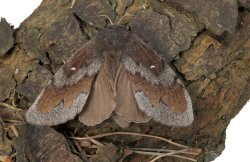
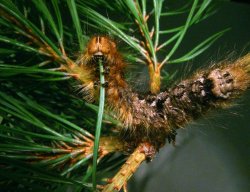
This project aims to determine the level of risk to Scots pine and other tree species posed by the recent discovery of defoliating caterpillars of the pine-tree lappet moth (Dendrolimus pini) in Scotland and whether it is a recent introduction or a previously undiscovered native species. The UK life-cycle and biology are being studied and climate models developed to predict the likelihood of outbreaks and guide future management and control.
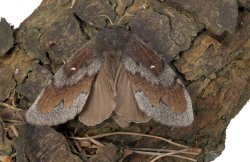
Surveys of over 60 woodlands have shown that PtLM populations are restricted to just a small number of plantation forest sites to the west of Inverness. Annual monitoring surveys using pheromone and light trapping techniques regularly capture PtLM adults at the same sites and there are early signs of restricted natural spread each year. PtLM has not yet been found breeding in any ancient Caledonian pine sites of similar local climate to the breeding sites.
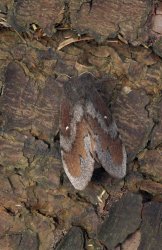
Over 200 moth samples have been analysed from across the huge distribution range of PtLM. Mitochondrial DNA sequence data indicates there are three genetic groups: a central and northern group including PtLM from Norway, through central Europe and down to Hungary; a group comprising moths from Spain and western France, and finally a third group consisting of individuals from Italy, Turkey and Mongolia as well as moths from the Scottish PtLM population. In addition, the genetic diversity of the Scottish population is very low when compared to a German population from the centre of the distribution range.
Feeding trials have shown that PtLM caterpillars are capable of feeding and developing rapidly on both pine and Sitka spruce foliage in the UK. Our findings suggest that development of the moth is entirely under environmental control and that the rate of development is likely to reduce and risk increase as the climate warms.
Sustaining and enhancing trees, forests and woodlands
This is aimed at ensuring that trees, forests and woodland are properly managed and protected from the increasing pressures on land caused by climate change and population growth which also put trees and forests at risk. Diseases and pests also pose an increasing danger.

Template for a Pest Risk Analysis (PRA) Record from the European and Mediterranean Plant Protection Organisation

Research Scientist
Cookies are files saved on your phone, tablet or computer when you visit a website.
We use cookies to store information about how you use the dwi.gov.uk website, such as the pages you visit.
Find out more about cookies on forestresearch.gov.uk
We use 3 types of cookie. You can choose which cookies you're happy for us to use.
These essential cookies do things like remember your progress through a form. They always need to be on.
We use Google Analytics to measure how you use the website so we can improve it based on user needs. Google Analytics sets cookies that store anonymised information about: how you got to the site the pages you visit on forestresearch.gov.uk and how long you spend on each page what you click on while you're visiting the site
Some forestresearch.gov.uk pages may contain content from other sites, like YouTube or Flickr, which may set their own cookies. These sites are sometimes called ‘third party’ services. This tells us how many people are seeing the content and whether it’s useful.