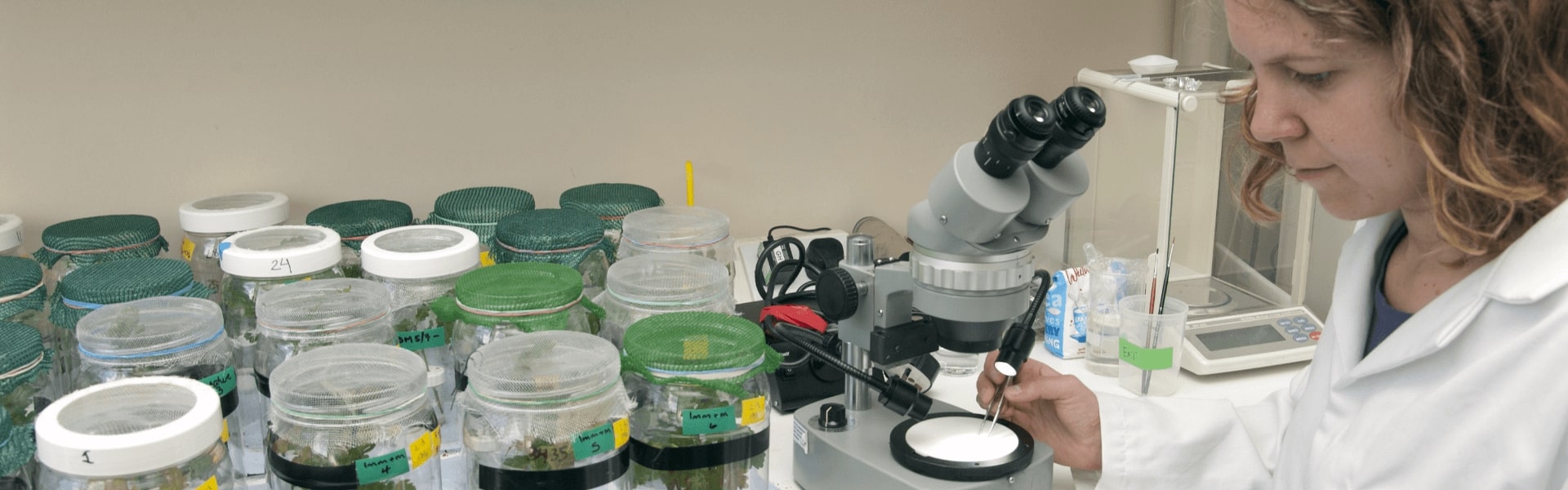
The Tree Health Diagnostic and Advisory Service provide advice and where possible diagnosis and identification of tree pests and pathogens.
Range of services:
- Reporting tree pests and diseases
- Diagnostic & advisory service
Reporting tree pests and diseases
If you are reporting a tree pest or disease, please use TreeAlert
What is TreeAlert?
TreeAlert is the online reporting tool for tree pests and diseases, managed by Forest Research with funding from Defra, Forestry Commission, Scottish Forestry and Welsh Government. It is a valuable aid allowing you to quickly report any suspect findings of tree pests and diseases which are of concern in Britain.
TreeAlert was created following the arrival of Chalara (ash dieback) as an easy method that encouraged rapid reporting. It is the only online tool in the country created for the purpose of flagging up potentially new tree pest and disease threats and can act as an early warning system to protect our trees.
What happens to TreeAlert reports?
Once you have submitted your TreeAlert report, it will be triaged by Forest Research and assigned to pathology or entomology diagnosticians within the Tree Health Diagnostic and Advisory Service for review.
Once reviewed, the diagnostician assigned to your enquiry will make a diagnosis, request more information or they may request samples, this will be done generally via email.
We aim to respond to enquiries within two weeks although this can be significantly longer during our busy periods or based on the nature of your enquiry. Please note that regulated pests and pathogens are given priority over any other enquiry, and these are transferred immediately to the official teams in the countries (Forestry Commission, Scottish Forestry, Natural Resources Wales or Animal Plant Health Agency).
How do TreeAlert reports help protect the nation’s trees, woodlands and forests?
The management of pests and diseases is greatly helped by early detection and prompt action. The effectiveness of TreeAlert depends completely on the reports submitted by users. Apart from the rapid detection of new threats, the reports also give us an indication of the most common disorders currently affecting trees as well as gathering information about the general health of the nation’s trees, woodlands and forests. We use the data obtained through TreeAlert to follow up findings, to identify trends of spread, to direct surveys looking for regulated or quarantine pests and pathogens and to support pest and disease management. In addition to the reports submitted to TreeAlert, the Forestry Commission and Forest Research carry out various surveillance activities for the detection of a range of tree pests and diseases.
Reporting suspected cases of Chalara die back of ash
Chalara dieback of ash is a disease of ash trees caused by the fungus Hymenoscyphus fraxineus. The disease causes leaf loss and crown dieback in affected trees, and is usually fatal.
We would encourage you only to report suspected cases of Chalara dieback of ash in new (unshaded) areas on the following map or possible basal lesions on Ash trees in any location.
Please use TreeAlert to report your finding
Confirmation of Chalara dieback of ash can now be made using detailed photographs of clear symptoms rather than by molecular diagnostics. If you require molecular confirmation of Hymenoscyphus fraxineus infection there may be a fee associated with this service.
Further information on Hymenoscyphus fraxineus and details on symptoms guidance
Diagnostic & Advisory Service
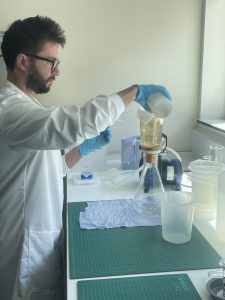
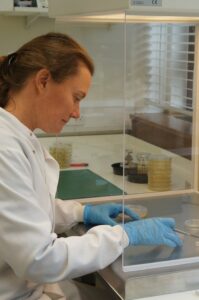
This is a chargeable service offering the diagnosis of pests and diseases on trees using conventional and molecular methods, identification of fungal fruiting bodies and general information and advice on all aspects of tree diseases and disorders
There is no charge for this service if the enquiry concerns a regulated pest or disease
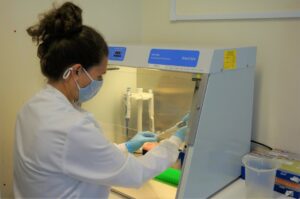
We deal with samples from the following:
- Woodlands in both public and private ownership
- Trees on farmland, in hedgerows, shelterbelts and screens
- Christmas tree plantations
- Trees in forest and horticultural nurseries
- Publicly and privately owned amenity trees
If you own or manage trees please use TreeAlert
Please note that you will need to include your TreeAlert reference number received after submission of your report.
For further information on how to take and package samples please visit Advice on how to take and package samples
Diagnostic service charges
There is a flat rate charge for the initial investigation which in many cases may be all that is needed to resolve the problem. Additional work, which may involve culturing from specimens or a site visit, will incur additional charges but will not be undertaken without the prior agreement of the customer.
In the event that you are unable to use TreeAlert to submit your enquiry, please contact us.